Knowledge Graph in 100 Lines of Code

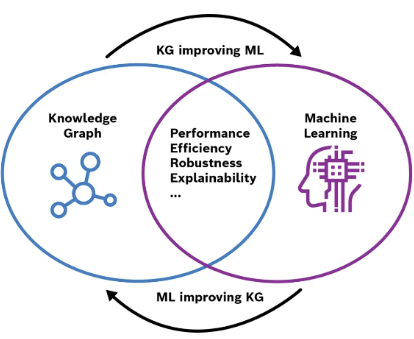
Knowledge graphs are getting lots of attention at the moment, as they are the natural Yin to the Yang of LLMs, providing structured data to chat interfaces, and powering Retrieval Augmented Generation. In this article Dan Selman demonstrates how to create your own custom Knowledge Graph using Typescript, Open Source tools and the Neo4J database.

His graph represents nodes and edges for a simple movie database including nodes for movies, actors, directors and users who have rated movies. His demo using Open AI retrieves three top-rated movies semantically similar to the search query ‘Working in a boring job and looking for love’ though that exact text doesn’t appear in the summary of the movie. Link

Posted in Knowledge Representation, LLM | Leave a comment

IBM Business Automation Manager Open Edition 9.0

IBM presented BAMOE 9.0 – watch a webinar on Dec 13. It introduces new IBM Decision Manager and Process Automation Manager Open Editions that replace the corresponding Red Hat products:

Tim Wuthenow explained that BAMOE is going to be a separate open-source solution that “is not a part of IBM Cloud Pak for business automation” (including IBM ODM). “BAMOE will be sold as a software support subscription, not a product license associated with it.” You may try it now. Link

Continue reading
Posted in Business Processes, Business Rules, Decision Modeling, Products, Vendors | Leave a comment

Peter Norvig about Generative AI and Programming

Peter Norvig, the AI Authority for the last 40 years, recently shared his vision of Software in the age of Generative AI. He talks about the history and the future of programmers, programming languages, and the software industry. Link

Posted in Artificial Intelligence, Trends | Leave a comment

Gartner: “Decision-Centric” is surpassing “Data-Driven”

Gartner predicts that by 2028, 25% of chief data and analytics officer vision statements will become “decision-centric,” surpassing “data-driven” slogans, as human decision-making behaviors are modeled to improve data and analytics. Data alone doesn’t change decision-making behaviors, unless it is used in deciding. Without a decision-centric vision, companies risk veering away from key stakeholder needs and the imperative of driving better decision making, not just better data. The commonly expected benefits of DecisionIntelligence are: ☑️ decision alignment with organizational goals and objectives ☑️ reduction of inconsistencies, better collaboration with stakeholders, and ☑️ increased acceptance of the decision by the organization. Link

Posted in Decision Intelligence, Decision Making, Trends | Tagged , | Leave a comment

Diagram-based Engineering

Vincent Lextrait started an interesting discussion at LinkedIn about why “diagram-based engineering”, an approach Low code/No code belongs to, has been tried every 20 years, and always failed. “Just ask Grady Booch who co-invented UML. He’ll tell you that the failure is due to the fact that diagrams are inherently imprecise. Granted they are more precise than natural language, but they still fall short to capture the complexity of business applications. Nobody will try as hard as Grady. It’s just that the industry has forgotten now, it was 20 years ago (the same idea with flow charts 20 years before failed too). Oh you can deliver stuff, but it’ll be simple, not future-proof and you’ll enjoy short happiness. And bad performance. To reach the right level of finesse (and exceed it), you need text-based input: code. This is why math people invented their own language, because natural language was an obstacle to progress.” Link

Posted in Diagramming, LowCode/NoCode | Leave a comment

Decision-making under uncertainty

Making decisions under uncertainty is hard. The best course of action can be very counter-intuitive. Meinolf Sellmann provided a good example that illustrates this. His article “A Tale of Two Coffees” showcases a tool that cuts through the uncertainty, even when pursuing multiple objectives at the same time. Link

Posted in Decision Making, Uncertainty | Leave a comment

Smarter Decisions for a Better World

Operations Research and the Management Sciences (OR/MS) is the computer science technology with probably the most impressive real-world success stories in decision optimization. However, being “too scientific”, OR/MS remains a well-kept secret for many years. The Institute for OR/MS, known as “INFORMS” has decided to switch to a new branding. While some people try to take advantage of the booming “AI”, INFORMS introduced a new tagline: “Smarter decisions for a better world”. It stresses Operations Research as the scientific process of transforming data into insights to making better decisions. The second half of the tagline – “for a better world” – alludes to the slogan: “Saving lives. Saving Money. Solving problems.” Read more

Continue reading
Posted in Decision Making, Decision Optimization | Leave a comment

GPT for Criminals

Criminals are known to be good to take advantage of a new technology. It’s only naturally that hackers have already started to apply different variations of Generative AI tools. For instance, WormGPT is the Generative AI tool used by cybercriminals to launch business email compromise attacks. WormGPT is described as “similar to ChatGPT but has no ethical boundaries or limitations.” Read more and more

Posted in Artificial Intelligence, ChatGPT, Security | Leave a comment

Challenge “Organ Transplants”: one more solution and ChatGPT

Our Mar-2019 Challenge “Organ Transplants” continues to genera an interest among DM practitioners. Jack Jansonius just submitted a new solution based on the integrated use of decision tables and SQL. We wonder if somebody tries to produce a working solution for this challenge using a Generative AI tool (see below what ChatGPT has offered). As always, our challenges do not have expiration dates, and more solutions to old challenges are always welcome.

Continue reading
Posted in Challenges, Database, Decision Modeling | Leave a comment

Objective-Driven AI

Objective-Driven AI refers to the idea proposed by Yann LeCun of creating AI systems that are explicitly designed and constrained to optimize particular objectives. The key aspects are: Architecture with different modules — perception, world model, action planning, cost functions. Today LeCun tweeted: “Instead of scaling current systems 100x, which will go nowhere, we need to make these Objective-Driven AI architectures work.” Watch his MIT talk “Objective-Driven AI: towards AI systems that can learn, remember, plan, reason, have common sense, yet are steerable and safe“. Read also “The Future of AI is Goal-Oriented

Continue reading
Posted in Artificial Intelligence, Goal-Oriented | Leave a comment