“The tech industry has had a new centre roughly every fifteen years… Mainframes were followed by PCs, and then the web, and then smartphones.” In his new article Ben Evans shares what potentially comes next. Link
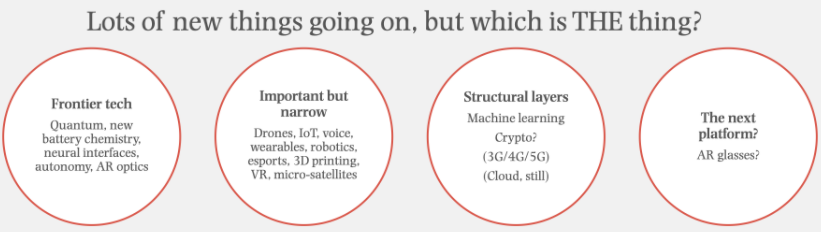
“The tech industry has had a new centre roughly every fifteen years… Mainframes were followed by PCs, and then the web, and then smartphones.” In his new article Ben Evans shares what potentially comes next. Link
 In this webinar Red Hat specialists explain how explainable Predictive Decisioning can help us trust AI. Their approach combines AI/ML, decision optimization, and traditional business rules to better understand the factors that contribute to an automated decision. They use the latest standards for representing decision logic, and demonstrate an XAI solution built from open source components to answer questions about why an automated decision was made. Link
“Data analysts often fail to produce insights for making effective business decisions, but that’s not their fault. Data-driven decision-making anchors on available data. This often leads decision makers to focus on the wrong question. Decision-driven data analytics starts from a proper definition of the decision that needs to be made and the data that is needed to make that decision.” Link
 Philippe Laborie from IBM CPLEX team shared several models for representation and solving an optimization problem in assembly line balancing research. His solutions are shown in Python CP Optimizer and OPL: they are not only very compact but highly efficient. Link
 For as long as databases have existed, people have been trying to migrate to something new but the reality of migrating databases is hard. On Dec. 1 AWS announced something very different: it is open sourcing Babelfish that acts as a new translation layer for PostgreSQL! “Babelfish enables a company to move to PostgreSQL and run that database…anywhere. On-premises? Yep. On AWS? Of course. On Azure/GCP/Alibaba/cloud-of-your-choice? Absolutely. In this way, Babelfish could actually be the heart of a multicloud strategy, at least for database workloads. Build on PostgreSQL and run those workloads anywhere you want. Yes, AWS would prefer that enterprises will use Babelfish to run more PostgreSQL applications on AWS, but because it’s open source, the user decides where they want to run their PostgreSQL workloads.” Link Continue reading
 As the Queen’s Gambit movie brings attention to chess, try to solve our Dec-2020 Challenge: “Three world champions Fischer, Kasparov, and Karpov played in a virtual chess tournament. Each player played 7 games against two other opponents. Each player received 2 points for a victory, 1 for a draw, and 0 for a loss. We know that Kasparov, known as the most aggressive player, won the most games. Karpov, known as the best defensive player, lost the least games. And Fischer, of course, won the tournament. What is the final score?” Link
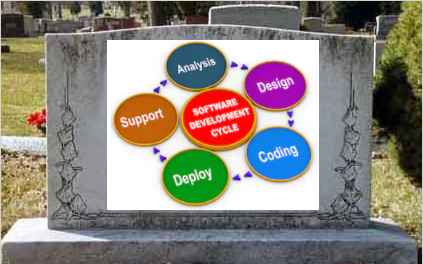 This article by Allan Kelly discusses a provoking statement “Most software has a very short lifespan“. “Most software isn’t successful and therefore dies. Software which isn’t used or doesn’t generate enough benefit is abandoned, modifications cease and it dies. Successful software is software which is used, software which delivers benefit, software that fills a genuine need and continues filling that need; and, most importantly, software which delivers more benefit than it costs to keep alive survives. If it is used it will change, that means people will work on it.” Link
Gary Marcus, a prominent figure in AI, “is on a mission to instill a breath of fresh air to a discipline he sees as in danger of stagnating.” He offers 4 “needs” for Robust AI:
Alex Fleischer from IBM ILOG team wrote: “First, decision optimization can help reduce inbalance and help us live with Covid-19. Second, Optimization can help us look for a vaccine or a medicine. Third, Optimization will once we have some vaccine or medicine (as soon as possible I hope) send this pandemics to history. And finally, I will remind that optimization can help healthcare, always, before Cov-19, during Cov-19 and after Cov-19.” Link
 Cloud adoption is the new normal for customers of all industries, sizes, and geographies. The majority of Digital Decisioning vendors today support deployment of decision services on different cloud platforms. The 2020 Gartner Magic Quadrant for Cloud Infrastructure & Platform Services evaluates the major cloud platforms: Link


 Decision Management Community
You must be logged in to post a comment.