
IBM ADS is now available standalone

IBM Automation Decision Services (ADS) is now available as a standalone offering, providing business experts an even easier way to automate intelligent business decisions in low code. Link

Posted in Products | Leave a comment

How to Chat with a PDF Document

This video uses the new GPT-4 API to ‘chat’ with a 56-page legal PDF document about the famous supreme court case: Morse v. Frederick:

Posted in API, Artificial Intelligence, GPT-4 | Leave a comment

Challenge Mar-2023 “Permit Eligibility”

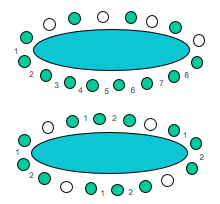
Ponder our Mar-2023 Challenge: As part of a regulatory process, a government agency introduced a simple rule: an applicant is eligible for a resident permit if the applicant has lived at an address while married and in that time period, they have shared the same address at least 7 of the last 10 years. How will you implement the proper decision model? Link

Posted in Challenges, Decision Models | Leave a comment

A new interface?

Prof. Toby Walsh shared “Bard, Bing and Baidu: how big tech’s AI race will transform search – and all of computing”: “When Microsoft launched Windows, it was the start of a revolution. Rather than typing cryptic instructions, we could just point and click on a screen. That revolution continued with the launch of Apple’s iPhone – an interface that shrunk computers and the web into the palm of our hand. Perhaps the biggest impact from AI-driven search tools will be on how we interact with the myriad ever-smarter devices in our lives. We will stop pointing, clicking and touching, and will instead start having entire conversations with our devices. We can only speculate on what this might mean in the longer term. But, for better or worse, how we interact with computers is about to change.” Link

Continue reading
Posted in Artificial Intelligence, Human-Machine Interaction | Leave a comment

BBN Times calls Rule-based Systems “Fake AI”

In the latest article it says: “Fake AI is designed to deceive the user into thinking that it is a real AI application. Fake AI applications are often simple rule-based systems that use predetermined responses to simulate AI. The goal of fake AI is to trick users into thinking that they are interacting with a real AI system, when in fact, they are not. It does not have the ability to generalize or make decisions based on new information, and it relies on pre-programmed rules or decision trees.” “Rule-Based Programming: Fake AI is created using a set of pre-defined rules and decision trees that specify how the system should behave in certain situations. These rules are created by humans and are not based on any learning or training process.” But don’t worry: it also calls Alan Turing “Alin”.

Posted in Humor, Misc | Leave a comment

Meet Bard, Google’s Answer to ChatGPT

WIRED just published comments on today’s announcement that Google will roll out a chatbot named Bard “in the coming weeks.” The launch appears to be a response to ChatGPT, the sensationally popular artificial intelligence chatbot developed by startup OpenAI with funding from Microsoft. Sundar Pichai, Google’s CEO, wrote in a blog post that Bard is already available to “trusted testers” and designed to put the “breadth of the world’s knowledge” behind a conversational interface.

Posted in Artificial Intelligence, Human-Machine Interaction, Innovation, Products | Leave a comment

RFP Process is Waste of Time

Silvie Spreeuwenberg wrote: “As someone who has experience drafting RFP questions, being on an assessment team, and responding to RFPs, I can honestly say that this process is often a waste of time and can lead to disappointing results for both client and supplier. So, here I will summarise my experiences and highlight four points to consider when drawing up RFP processes within the software industryLink

Posted in Misc, Trends | 1 Comment

Google Chain of Thought

On Jan 18, 2023 Jeff Dean, Senior Fellow and SVP of Google Research, published “Google Research, 2022 & Beyond: Language, Vision and Generative Models” that could be treated as a response to ChatGPT boom without mentioning its explicitly. In particular, it includes an interesting comparison dialogs created by the “Standard Prompting” and “Chain of Thought Prompting”: Link

Continue reading
Posted in Artificial Intelligence, Human-Machine Interaction, Innovation | Leave a comment

Business Rules and Ontology in an Event-Driven Architecture

Bas van der Raadt describes an event-driven business architecture that connects business activities (business rules) with business data (ontology) via business events (state changes of business data). model. He explains how everything comes together and how it helps business people to get true insights into their domain. Link

Posted in Architecture, Business Rules, Event-driven, Semantic Web | Leave a comment

Gartner’s Low-Code Application Platform Magic Quadrant

Paul Vincent: “Gartner’s Low-Code Application Platform Magic Quadrant and Critical Capabilities research covers platforms for building applications that range from enterprise business applications to smaller departmental applications. Many business process automation tools overlap with LCAP in terms of capabilities, and vendors are improving their business logic capabilities with metaphors like decision tables increasing in availability. In 2022 larger enterprise customers of LCAPs still used separate decision service / DMS platforms, business process platforms, and/or integration platforms alongside their LCAP.Link

Posted in Digital Decisioning, Trends | Leave a comment