Arash Aghlara: What is a Decision Model

“A decision model is a roadmap and blueprint of a business decision that depicts a holistic view of how a business decision is made. At its core, this blueprint is an executable artifact that uses multiple composite techniques to bring together smaller, more understandable, and self-sufficient decision units. It specifies how a decision is made using the relationship and dependencies between the decision units.

The decision model essentially acts as the coordinator between multiple decision units, passes information in, sends the outcomes of one unit to another, and proceeds until the decision is made. Once the model is defined, then each decision unit in the decision model can use different techniques and technologies such as business rules, AI/ML, data processing, workflow, algorithms, etc.” Link

Posted in Decision Modeling, Decision Models | Leave a comment

BBC-2024

Building Business Capability (BBC) comes to Loews Sapphire Falls Resort at Universal Orlando, Florida, on April 15 – 19, 2024. The conference enhances your ability to advance People, Product, Data, and Knowledge, to build your core leadership skills, to create a customer centric organization, and to deliver digital transformation. Link

Posted in Events | Leave a comment

Linear Regression in DMN

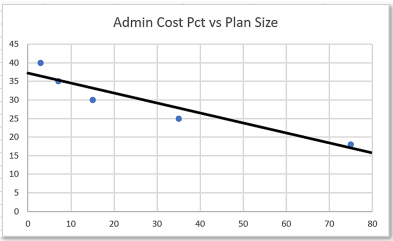
In his recent post Bruce Silver wrote: “DMN is not optimized for machine learning algorithms, but it’s good enough for simple problems such as fitting a straight line to a set of data points, known as linear regression.  In this post we’ll look at two ways to do it.” Link

Posted in Decision Modeling, DMN, Machine Learning | Leave a comment

Decision Intelligence at Gartner Summit

Decision intelligence will be well presented at Gartner Data & Analytics Summit that starts on Mar 11 in Orlando. In particular, Erick Brethenoux, Distinguished VP Analyst, will present “Decision Intelligence and Optimization Across Your Enterprise and Ecosystem”. Here is the abstract: “Faster and optimal decision-making is a competitive differentiator. But silo data, silo decisions and silo mentality are not cutting it in today’s global and highly interconnected business ecosystems. A more networked approach is required, bringing together technologies such as optimization, graph analytics and AI. This session will provide practical guidance to bring your decision intelligence to the next level.” View complete Agenda

Posted in Artificial Intelligence, Decision Intelligence, Events, Trends | Leave a comment

Decision-makers behind the curtain

Cassie Kozyrkov: When it comes to AI, which part am I most concerned about? The decision-maker behind the curtain. Forget creepy robots — if there’s anything to fear, it’s human negligence. Most people think of AI as a tool for decision-making, but it’s very much the product of decision-making…

  • Whose decision-making?
  • Did they have the skills needed?
  • Are we amplifying decision intelligence… or decision stupidity?
  • Who is making the decisions behind an AI system?
  • Which success metrics are they choosing to optimize for?
  • Which datasets are they selecting to train their models?
  • How do they know their system is safe to launch?
Posted in Artificial Intelligence, Decision Making | Leave a comment

What makes a system “real time”?

Roy Schulte wrote an interesting article about it. “Real time is whatever you need it to be, but with an eye toward speed and using some reasonable constraints. In both engineering and business, real time is all about acting in the “right time” for that particular process. You need to identify the point of diminishing returns where going faster doesn’t improve the results or where the costs of going faster outweigh the benefits of going faster. Real time refers to the duration of the end-to-end process from the observation of new information to the execution of the response. It’s often useful to analyze a process using the observe-orient-decide-act (OODA) loop” Link

Posted in Business Processes, Digital Decisioning, Event-driven | Leave a comment

AI Pollution

“The amount of AI-generated content is beginning to overwhelm the internet. Or maybe a better term is pollute. Pollute its searches, its pages, its feeds, everywhere you look. I’ve been predicting that generative AI would have pernicious effects on our culture since 2019, but now everyone can feel it. Back then I called it the coming semantic apocalypse. Well, the semantic apocalypse is here, and you’re being affected by it, even if you don’t know it.” Link

Posted in Artificial Intelligence, Trends | Leave a comment

Are we solving the correct problem?

Deepak Mehta: “As problem-solvers, we have all been there. You find the perfect solution to a problem, only to realize that the problem you were trying to solve was different from the one you were presented with. Or worse yet, you discover that the solution you found can’t be used in production because of existing processes or system restrictions. What can we do to avoid these situations? Taking into account the perspectives of all stakeholders involved can help us identify relevant constraints and ensure that our proposed solutions are practical and feasible. So, before you rush to implement a solution, take the time to collaborate with all stakeholders and get a comprehensive understanding of the problem at hand.” Link

Posted in Decision Modeling | Leave a comment

Unlocking multimodal understanding across millions of tokens

Today Google announced Gemini 1.5 that supports “millions of tokens of multimodal input. The multimodal capabilities of the model means you can interact in sophisticated ways with entire books, very long document collections, codebases of hundreds of thousands of lines across hundreds of files, full movies, entire podcast series, and more”. Report Demo

Posted in LLM | Leave a comment

Learning Decision Rules with GPT

On Feb 26 Simon Vandevelde, a frequent presenter at DecisionCAMPs, will talk about how to combine learning and reasoning in AI. Register for this free webinar. Here is his abstract: “Operational decisions are an important part of knowledge-intensive organizations, as these are taken in a high volume on a daily basis. However, describing these decisions in a standardized format such as DMN is a time-consuming task, as various textual sources need to be analyzed. In this talk, we present the results of our experiments on an automated approach to generating decision tables from natural language based on the GPT-3 LLM. Through a total of 72 experiments over six problem descriptions, we evaluated GPT-3’s decision logic modeling and reasoning capabilities. While GPT-3 demonstrates promising abilities in extracting decision context and identifying relevant variables from natural language, further enhancements are needed to improve its decision table capabilities for efficient automation of DMN modeling.” Link

P.S. The Recording shows quite negative results of generating DMN tables using GPT.

Posted in Decision Intelligence, Decision Modeling, DMN, Gen AI, GPT-4, LLM, Machine Learning | Leave a comment